
Koshary, the non-Egyptian national dish
When I first began writing recipes for this site (formerly a blog), I was constantly asked if and when I would put up a recipe …
Discover the world of traditional Egyptian vegetable dishes that are hearty and simple to prepare, from lentil soups to traditional stews like ‘olass. Now you’ll always eat your veggies.
Discover the world of traditional Egyptian vegetable dishes that are hearty and simple to prepare, from lentil soups to traditional stews like ‘olass. Now you’ll always eat your veggies.

When I first began writing recipes for this site (formerly a blog), I was constantly asked if and when I would put up a recipe …
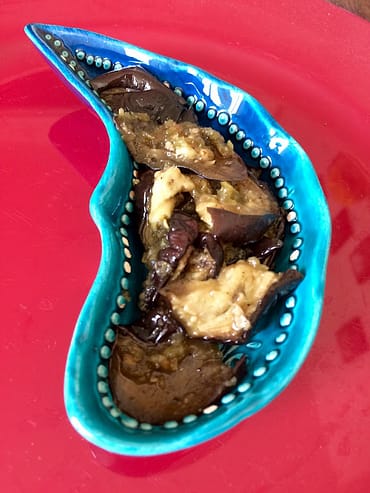
This recipe for Egyptian spicy pickled eggplants is so simple to make, it hurts. But if you can’t stomach spicy (i.e.hot chili), then you’ll have …

Molokheya, is by far an Egypt’s favourite dish and close runner to the national favourite. It’s a green, slimy (viscous) soup that is cooked in …

Today’s recipe is a return to a classic favourite of mine: Stewed okra (bamya) in tomato sauce. Bamya, arabic for okra. It’s my comfort food. It’s tasty, healthy (great for your digestive tract), and easy to make. If you’re new to okra, you just have to get over the sliminess texture. Once you get over that, you’re good. And you’ll thank me forever. You’re welcome.

I’d be lying if I said I just whipped up a batch of this soup….in fact I’ve been waiting for months it seems to share …

Du’ah is a fragrant and popular roasted and ground spice combination specific to Egypt. The Levantine region has its own mix, called Za’tar. Over the years, I’ve have many requests about this beloved and little known spice mixture . In Egypt, the word dukka is commonly pronounced as du’ah. The word derives from the Arabic word to pound, since the spices are toasted and then pounded using a mortar and pestle.
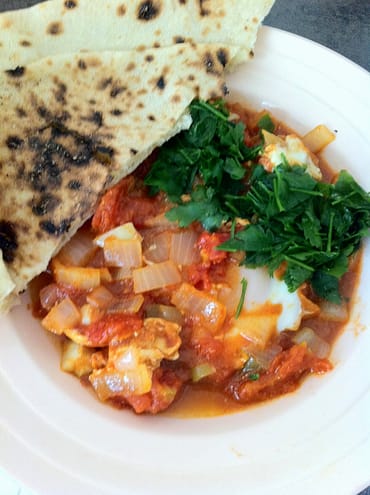
This is probably one of the most popular recipes across North Africa and especially in Israel. In my goal to only post Egyptian recipes I …

I’ve been trying to chase down this recipe for months now. Though I ate it back in 2010 for the first time during Christmas dinner in Cairo. I thought it was molokhia a green soup made from the fresh leaves of the molokhia plant. Not at all, though the spicing is similar.
I was told it was ‘olass. And that it is normally eaten on special occasions, like Christmas. But after some research between both sides of the family, and my Arabic tutor, turns out everyone eats ‘olass all the time and its a favourite dish of most households.
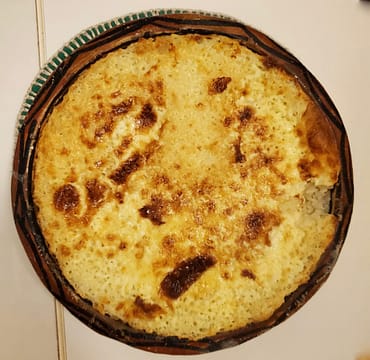
After a recent trip to Egypt – this time to cover the completely transparent and good-willed COP27 conference… (my real thoughts here) – I spent a week exploring a new area by the sea and some old hangouts in Cairo.
This time, a new dish fell into my lap. I do vaguely remember eating a variation of it growing up, but not in this form. At the insistence of my cousin, we ordered this dish for a friend who was visiting the country for the first time, as we were trying to show her all the culinary wonders the country has to offer.
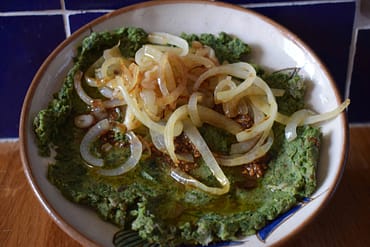
It’s that time of the year: fava bean season. And by fava bean, I mean broad beans. Not the beans used in ful mudammas. This is the bigger, louder cousin of the bean family.
All throughout the Mediterranean basin, fava beans are on display. Each country has its own approach to eating them. In Portugal, they are used to make hearty stews; in France, they are eaten fresh or thrown into salads. And in Egypt, they are pureed into a lovely dip called Bissara (pronounced: beess-awe-ra).
