
The Rich and “Blinged-Out” Rice of the Nile Delta
After a recent trip to Egypt – this time to cover the completely transparent and good-willed COP27 conference… (my real thoughts here) – I spent a week exploring a new area by the sea and some old hangouts in Cairo.
This time, a new dish fell into my lap. I do vaguely remember eating a variation of it growing up, but not in this form. At the insistence of my cousin, we ordered this dish for a friend who was visiting the country for the first time, as we were trying to show her all the culinary wonders the country has to offer.
Rice Bling: Living Up to Its Full Potential
They say if you’ve got it, flaunt it. That’s pretty much what this dish is about. Roz me’ammar, also referred to as roz muammar, means rice “brought up to par” in colloquial Egyptian dialect.
The literal translation is “rich”. So, it is a rich rice, or really, rice living to its full potential thanks to its friends: cream and milk.
The Fertile Bounty of the Nile Delta
The dish comes from the rich farming region of the Nile Delta – the fertile area north of Cairo where the Nile eventually reaches the Mediterranean. Today, one of the most important crops grown there is rice.
In fact, Egypt produces the most rice in North Africa using the Nile for irrigation. It produces enough for both exportation and domestic use, making the country 100% self-sufficient in this regard. Although rice itself is not native to Egypt, it likely made its way into the country during the Greek occupation via the expeditions of Alexander the Great, who imported the grain from India in the 4th century BC.
A Celebration of Simple Ingredients
The staple diet of Egyptian farmers has traditionally been simple, consisting of bread, aged cheeses, and pulses along with fresh vegetables. However, rice has found its way into the mainstay of the rural household as it is so easy to store.
During moments of economic hardship, roz muammar began to make its appearance because it made use of simple ingredients most households had lying around: cream, rice, and milk. A hit of this high-caloric dish probably does wonders when the daily diet starts to get meagre. Today, this dish is still cooked in a traditional clay pot, a beram, but is usually reserved for special occasions, such as weddings.
Regional Variations and Modern Twists
The traditional dish is just rice and milk or cream. You can also use milk and butter, or just butter, or just milk. Recent variations also include pieces of meat, such as beef, lamb, or chicken.
But, as I am a purist when it comes to making traditional dishes, this version is just rice with thick cream and heavy cream.
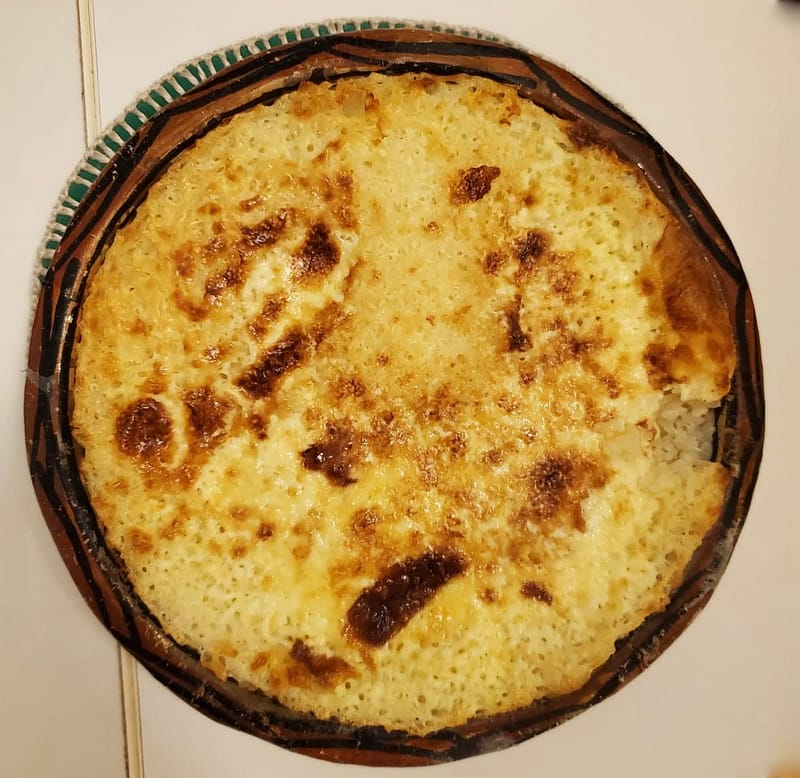
Roz Mu’ammar: Egypt’s indulgent, oven-baked savoury rice pudding
Ingredients
- 400 g / 2 cups short-grain rice
- 240 ml / 1 cup double (heavy) cream (or milk)
- 5-6 tbsp thick (clotted) cream
- 1 tbsp salt (or to taste)
Instructions
Wash the rice
- Wash the rice thoroughly in warm water until the water runs clear.400 g / 2 cups short-grain rice
Assemble
- Transfer the washed rice to a clay dish or baking dish.
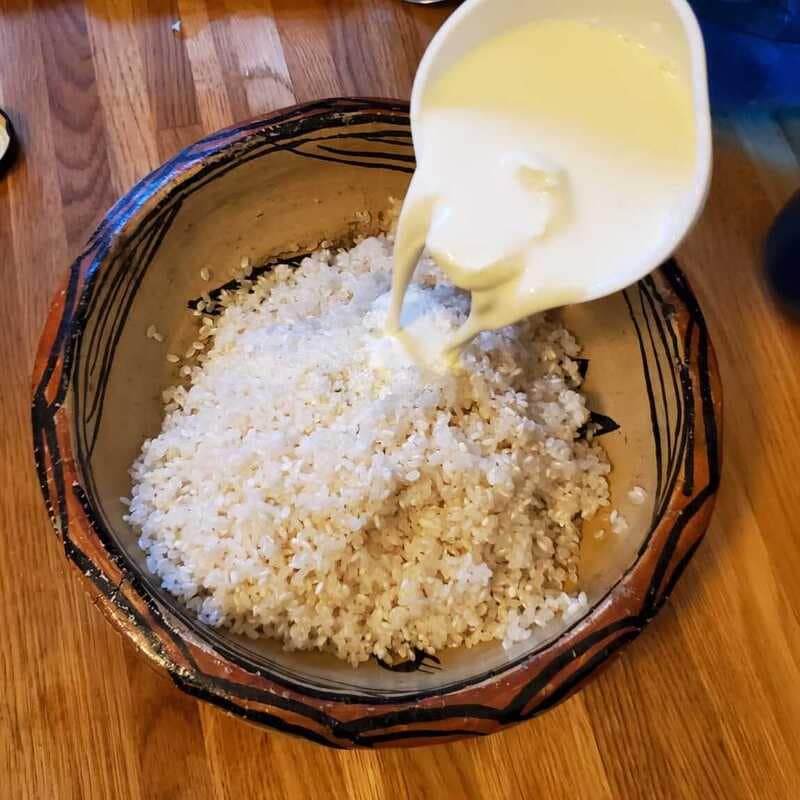
- Pour over the heavy cream so that it just covers the rice.240 ml / 1 cup double (heavy) cream

- Add the salt, mix gently and taste for seasoning.1 tbsp salt
Finish with cream
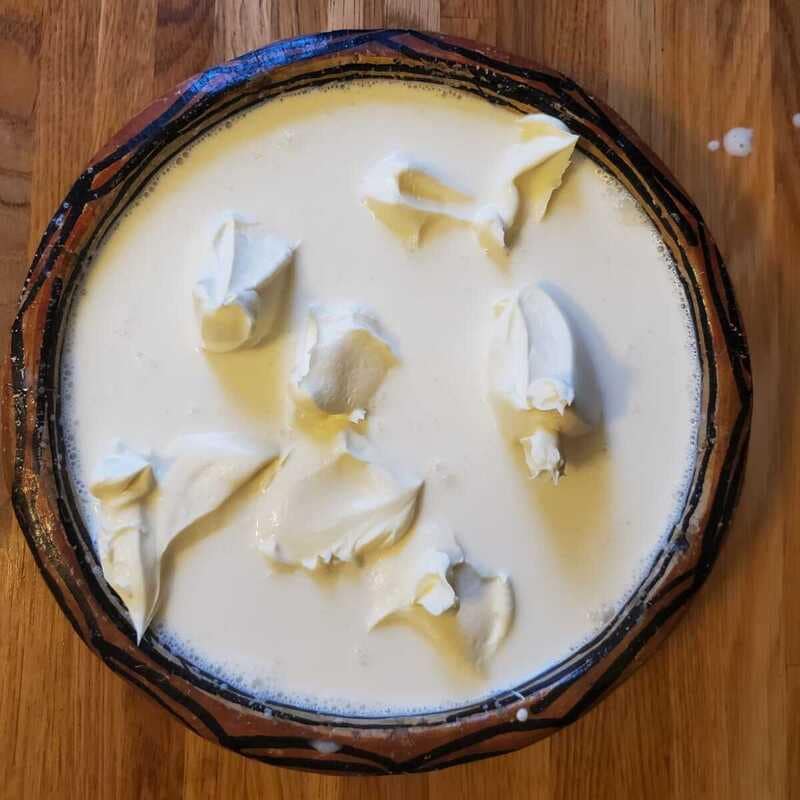
- Spoon the thick cream evenly over the top of the rice. Do not mix.5-6 tbsp thick (clotted) cream
Bake
- Place the dish in a preheated oven at 200°C (400°F).
- Bake for 30–40 minutes, until the top forms a golden crust and the rice is fully cooked.
